
A brown ceiling ring, peeling paint or a swollen baseboard can be the first thing you notice after a leak. These signs are clues, not a diagnosis: settling, poor paint adhesion and other problems can look similar. Find and address the source of moisture before covering the damage. Here are ten things to look for and the details that help us understand the repair.
Brown or yellow stains
A ring or irregular mark on a wall or ceiling can point to water entering from above or behind the surface. A mark that grows after rain or bathroom use is especially useful information for the person finding the leak.
- Take a dated photo showing the whole area and one close-up.
- Note whether the mark is dry, changing or reappearing after an earlier repair.
Bubbling or peeling paint
Moisture can affect the bond between paint and the surface underneath it. Blisters, wrinkles and lifting paint deserve a closer look, but poor preparation can also cause paint failure.
- Mention any known leak and when the paint was last applied.
- Do not scrape a suspect surface just to see what is behind it.
Soft or crumbling drywall
Water can weaken drywall. An area already known to be soft, crumbly or damaged needs more than a coat of paint. Do not press or probe the material to test it.
- Tell the contractor about any softness or broken edges you have already noticed.
- Keep clear of loose material, particularly overhead.
A sagging ceiling
A ceiling that bows, sags or changes shape needs prompt attention. Keep people away from the area and have the cause and stability checked before anyone works beneath it.
- Do not puncture a bulge to drain it or pull down loose material.
- Call the appropriate urgent service for an active leak or immediate hazard; an online estimate form is not emergency dispatch.
Cracks around seams or corners
A crack by itself does not prove water damage. New cracking alongside staining, dampness or lifting tape gives a contractor more information about what needs checking.
- Photograph the crack and its surroundings.
- Note whether it changes after rain or returns through a previous patch.
Related details from our work library
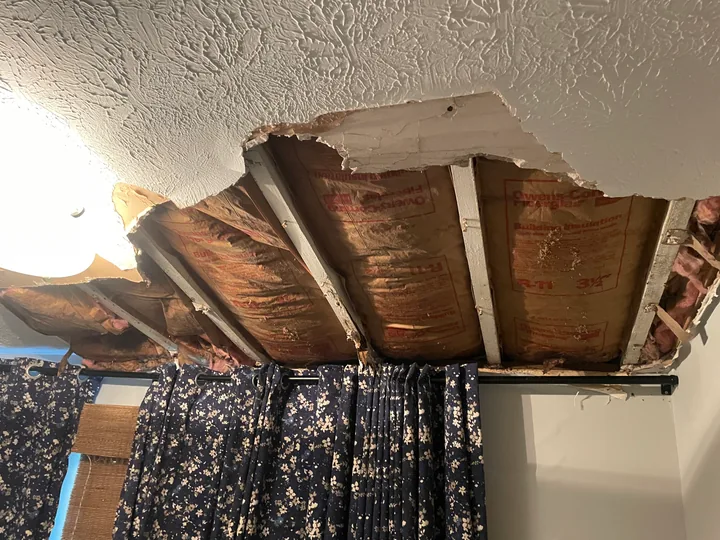
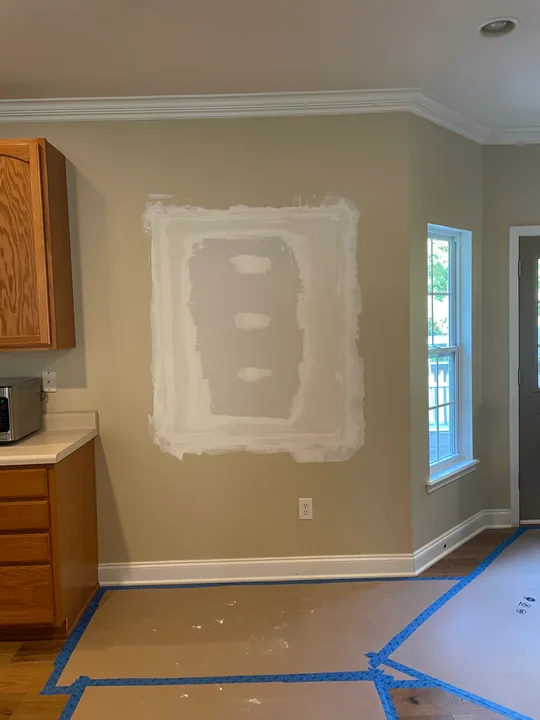
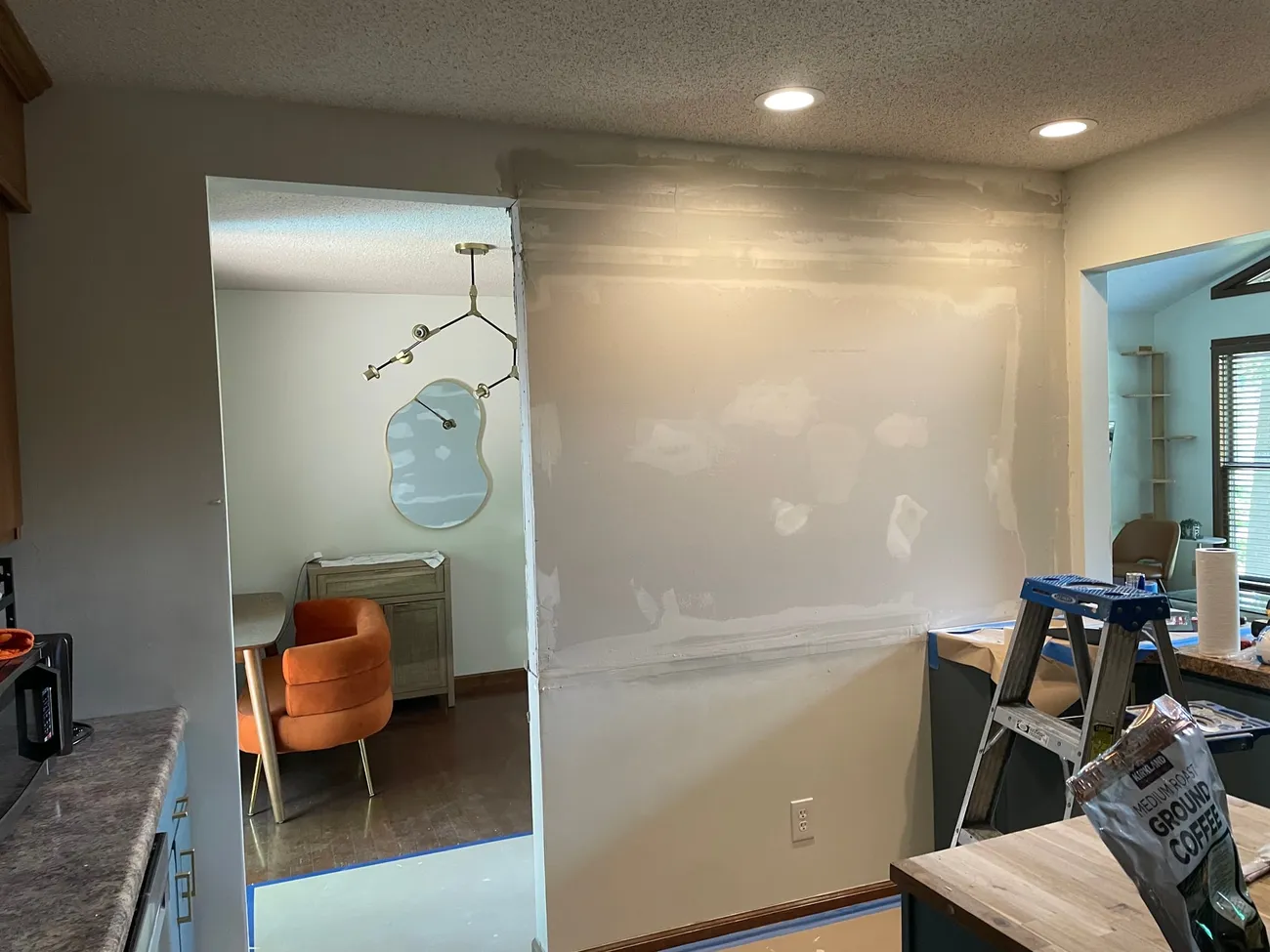
From our company work library. Select a photo to explore the related service.
A persistent musty smell
A damp or musty smell can be a reason to investigate moisture even when the finished wall looks normal. Tell the assessor when it is strongest and whether a leak or flood happened nearby.
- Mention adjoining bathrooms, exterior walls and any known plumbing issue.
- Do not open the wall yourself to search for hidden mold.
Visible growth or unusual spotting
Unusual patches or spotting need assessment; appearance alone does not establish what the material is or how far it extends. If mold is suspected, moisture control and the appropriate cleanup come before cosmetic repairs.
- Avoid disturbing suspect material.
- Consult the EPA moisture guide below for cleanup guidance and when to involve professional help.
Swelling or a bowed wall surface
A bulge, distorted panel or changing edge can indicate damage behind the finish. The repair may involve removing affected material rather than simply filling the surface.
- Show where the wall meets the ceiling, floor and adjoining trim.
- Keep clear if the surface appears unstable.
Nail pops or raised fasteners
Raised screws or nail heads are not proof of a leak; building movement can cause them too. They are more useful as a clue when other signs of moisture appear in the same area.
- Include nearby stains, cracks or loose tape in the photos.
- Tell us whether the fasteners have been repaired before.
Swollen baseboards or damaged trim
Water near floor level may first show up as swollen trim, peeling paint or a gap beside the wall. Include the adjoining floor in your photos so the repair is not limited to the most obvious mark.
- Note nearby fixtures, recent spills or known leaks.
- Mention soft flooring or a stain that continues into an adjoining room.
Fix the source, then repair the wall
A small dry patch and saturated drywall are different jobs. First establish where the water came from and address it. The repair can then cover any required removal, replacement, taping, texture, primer and paint. Ask whether the estimate includes repainting just the patch or the whole wall; that choice affects how the finish blends.
- Send the room location, approximate affected area and what has already been repaired.
- For a ceiling, include its height and the existing texture.
- Keep earlier photos or repair notes if the problem has returned.